Summary:
There’s a reason more homeowners in Carson City and Washoe County are booking exhaust duct cleanings this year — and it’s not because they suddenly have more time on their hands. Between wildfire smoke seasons that push local air quality into the “Unhealthy” range, desert dust that circulates year-round, and HVAC systems working overtime through Nevada’s extreme temperature swings, the exhaust systems in these homes take a beating. Most of the damage is invisible until it becomes a problem. This page will walk you through what exhaust duct cleaning actually covers, how to know when you need it, and what a legitimate job looks like versus a cheap one that leaves you worse off.
What Exhaust Duct Cleaning Actually Covers
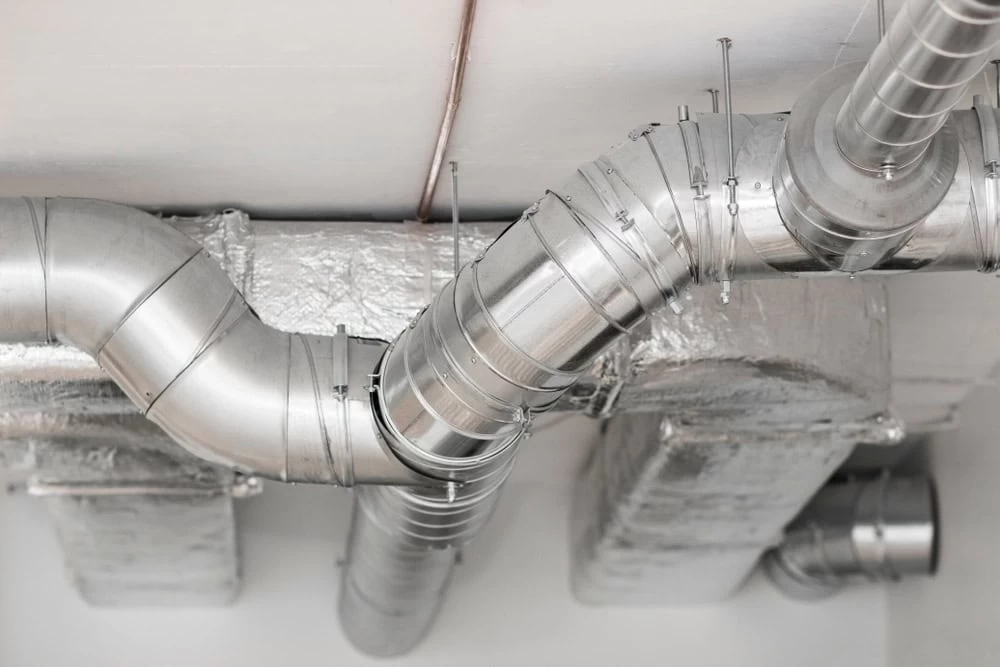
A lot of homeowners assume exhaust duct cleaning and air duct cleaning are the same thing. They’re related, but they’re not identical. Air duct cleaning focuses on the supply and return ducts that move conditioned air through your HVAC system. Exhaust duct cleaning specifically addresses the pathways that push air, moisture, and contaminants out of your home — your dryer exhaust, bathroom exhaust fans, and kitchen range hood.
Each of these systems serves a different purpose, but they share the same vulnerability: they accumulate debris over time, and when they get blocked or heavily coated, they stop doing their job. A clogged dryer exhaust duct is a fire hazard. A blocked bathroom exhaust fan breeds mold. A grease-coated kitchen exhaust line is both a fire risk and an air quality issue. We address all of it when we perform exhaust system cleaning.
Why Dryer Exhaust Duct Cleaning Gets the Most Attention — and Deserves It

The U.S. Fire Administration reports roughly 2,900 home dryer fires every year in this country. The leading cause isn’t a faulty appliance or an electrical issue — it’s failure to clean. Lint that bypasses the trap accumulates inside the exhaust duct over months and years, and at some point the heat from a normal drying cycle is enough to ignite it. Around 34% of dryer fires trace back to lint buildup, and the damage averages out to more than $35 million in property losses annually.
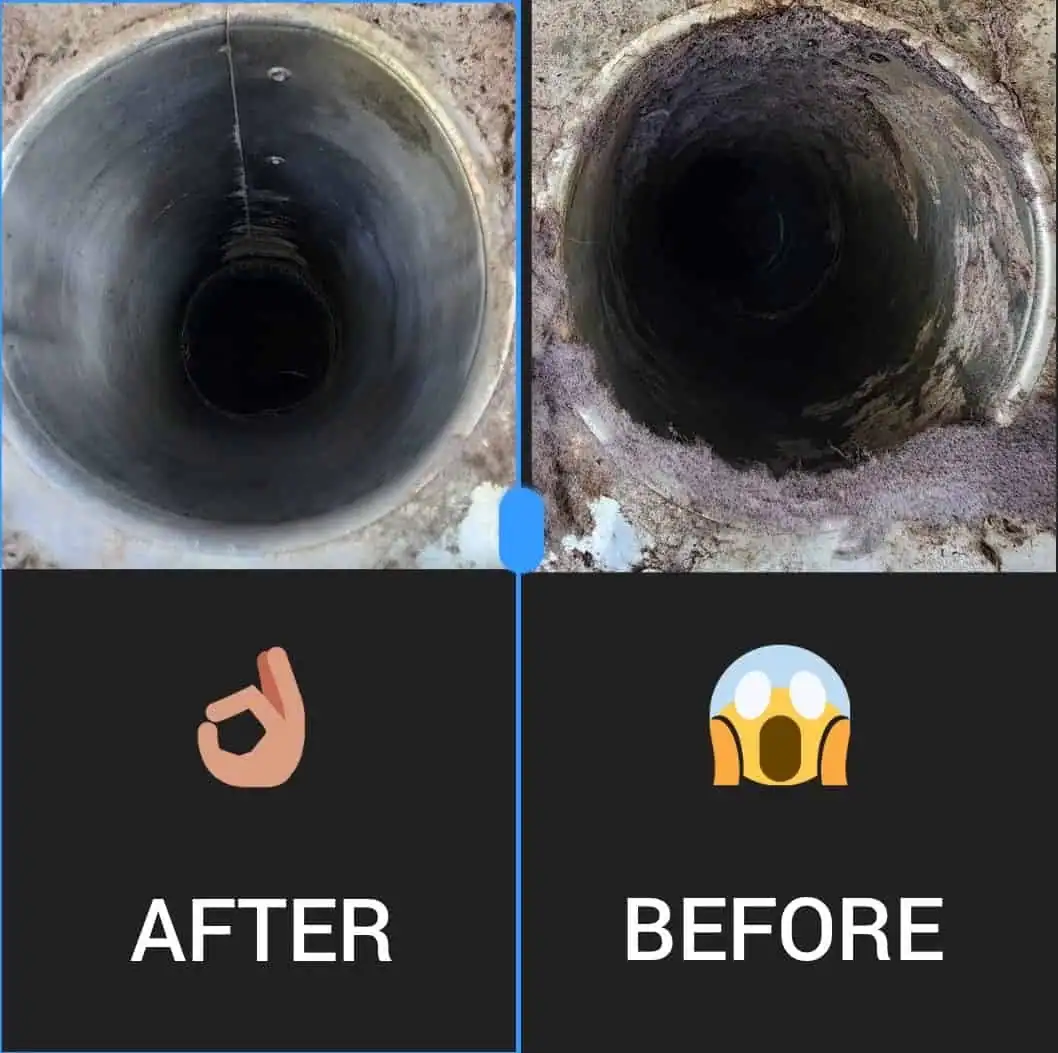
The part that catches most homeowners off guard is how quietly this problem develops. Your dryer might take two cycles to finish a load before you notice anything unusual. The vent flap outside might barely open when the dryer runs. There may be a faint burning smell that you write off as nothing. These are the warning signs — and by the time they’re obvious, the buildup is already significant.
For homes in Carson City and Washoe County, the risk compounds with the local environment. Nevada’s dry climate means lint and dust particles don’t clump and settle the way they do in humid regions — they stay loose and keep moving, which means more material makes it past the trap and into the duct over time. Add in the particulate matter from wildfire smoke events — Carson City recorded an AQI of 169 during the summer of 2021 — and you have a region where exhaust systems work harder and get dirtier faster than the national averages suggest.
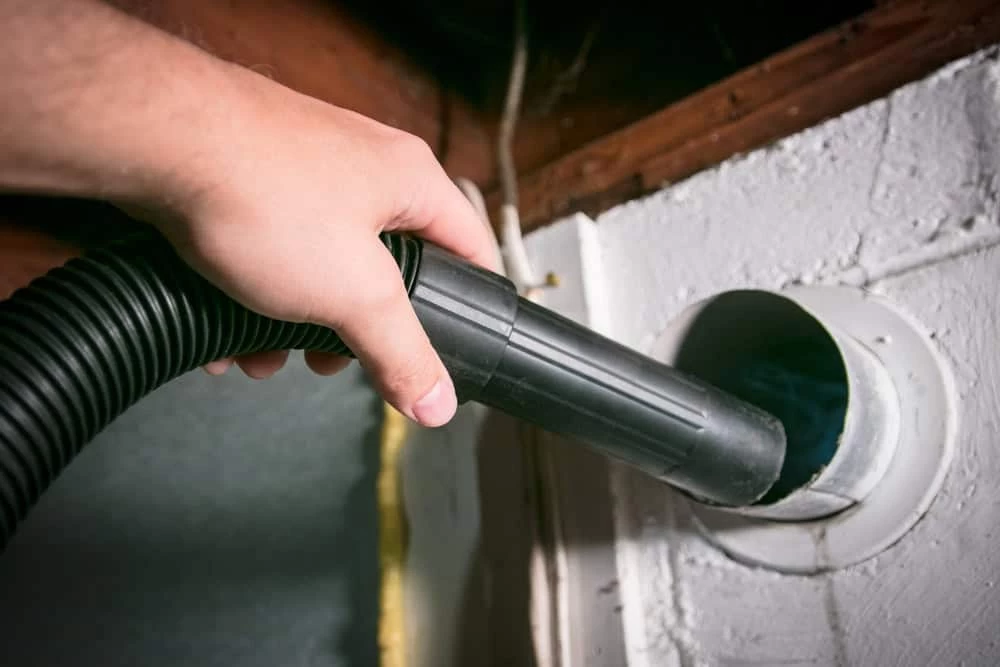
Dryer vent cleaning should happen at least once a year under normal use. If your household runs multiple loads a day, or if you’ve never had it done since moving in, sooner is better. The job itself takes a fraction of the time and cost of dealing with a dryer fire or a replacement appliance.
Bathroom and Kitchen Exhaust Vent Cleaning: The Systems Most Homeowners Overlook
Dryer vents get most of the attention because the fire risk is well-documented, but bathroom and kitchen exhaust ducts quietly cause their own problems when they’re ignored. Bathroom exhaust fans pull moisture out of the air during showers and baths — that’s their entire purpose. When the duct behind the fan is coated in dust and debris, airflow drops, moisture lingers, and you end up with the exact conditions that mold needs to take hold. In a high-desert climate like Washoe County’s, where indoor humidity is already carefully managed, a failing exhaust fan throws that balance off quickly.
Kitchen range hood exhaust ducts deal with a different kind of buildup: grease. Every time you cook on a stovetop, aerosolized grease travels up through the hood and into the duct. Over time, that grease coats the interior walls of the duct and becomes a fire accelerant. It also traps odors, reduces the hood’s ability to clear smoke and steam, and creates a surface that bacteria and mold are happy to colonize.
The recommended cleaning interval for exhaust fans is every six months — more frequently in kitchens that see heavy cooking. Most homeowners are well past that when they first look into it, and that’s fine. The point isn’t to feel behind; it’s to understand that these systems need regular attention to keep doing what they were installed to do.
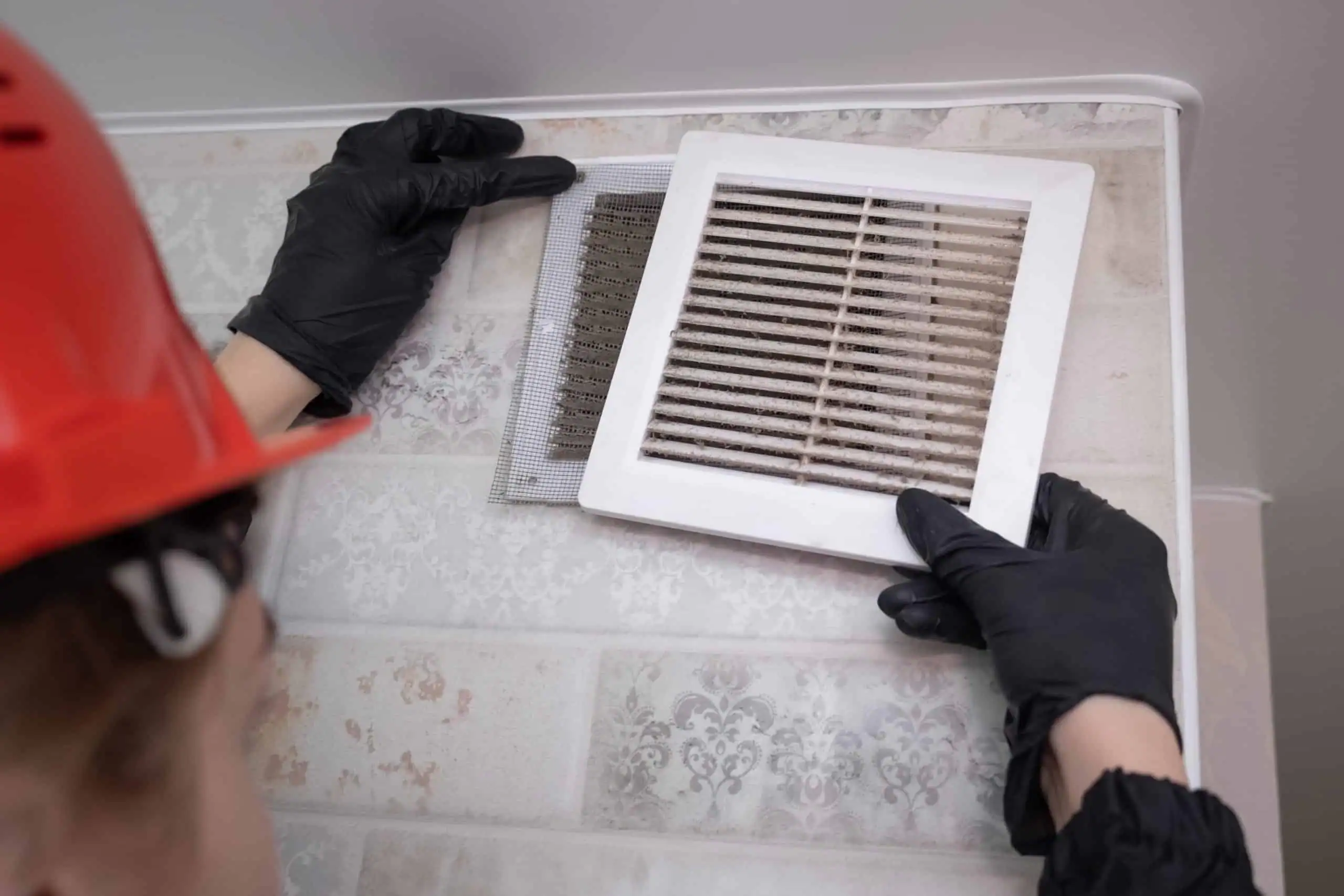
When we perform exhaust vent cleaning, here’s what the process looks like: we remove the vent cover, inspect the full length of the duct, clear the buildup using the right equipment for the specific system, and reinstall everything properly. It’s not a quick swipe with a brush. A thorough job on a bathroom or kitchen exhaust duct takes time and the right tools — the kind of work that justifies a professional visit rather than a DIY attempt that only addresses the first few inches of duct.
How to Tell a Real Exhaust Cleaning Service from a Cheap One
This is where a lot of homeowners get burned — not literally, but financially. The $99 whole-house duct cleaning ads that circulate on social media and neighborhood apps are almost universally a setup for a bait-and-switch. A legitimate exhaust duct and air duct cleaning for a standard home costs several hundred dollars at minimum. Anyone offering to do the full job for less than that is either cutting corners or planning to find “problems” on-site that require expensive add-ons.
The tell is in the process. Real cleaning uses negative air pressure equipment to pull debris out of the system rather than just displacing it. Rotary brushes agitate buildup from the duct walls. The full length of the duct gets addressed, not just the accessible end. And when the job is done, you should be able to see what was removed.
What NADCA Certification Actually Means for Homeowners in Carson City and Washoe County
NADCA — the National Air Duct Cleaners Association — is the industry’s primary standard-setting body. They publish the ACR Standard, which defines exactly how HVAC and exhaust systems should be assessed, cleaned, and restored. Technicians who hold NADCA certification have passed technical exams and are held to those standards on every job. It’s verifiable, it’s meaningful, and in an industry with a well-documented scam problem, it’s one of the clearest signals that a company knows what they’re doing.
What NADCA certification doesn’t do is guarantee a great experience — that still comes down to the individual company and how they operate. But it does establish a baseline. A certified technician won’t run a shop vacuum through your vents for ten minutes and call it done. They understand the full system, they know what proper removal looks like, and they’re accountable to a professional standard.
For homeowners in Carson City and Washoe County evaluating exhaust cleaning services, asking whether a company’s technicians are NADCA-certified is one of the most useful screening questions you can ask. It separates companies that have invested in professional training from those that are simply running a low-cost operation with minimal overhead and minimal accountability. You can verify NADCA membership independently through their online directory — you don’t have to take a company’s word for it.
Legitimate companies don’t use pressure tactics. If a technician shows up and immediately starts talking about dangerous black mold, catastrophic buildup, or urgent upgrades that weren’t part of the original quote, that’s a red flag. We give you an upfront price, do the work, and show you the results when we’re done.

Why Carson City and Washoe County Homes Have Specific Exhaust Cleaning Needs
The national guidance on cleaning frequency — annually for dryer vents, every three to five years for air ducts, every six months for exhaust fans — is a reasonable baseline, but it doesn’t fully account for regional conditions. Carson City and Washoe County have a set of environmental factors that accelerate the rate at which exhaust systems accumulate debris.
The desert climate is the starting point. Low humidity keeps dust particles suspended in the air rather than settling, which means more of it gets pulled into exhaust systems over the course of a year. The Sierra Nevada sits to the west, and the Great Basin extends to the east — the region sees both mountain weather and desert conditions depending on the season, and HVAC systems run hard in both directions. Cold winters mean significant heating seasons. Summers push temperatures well above 90 degrees. Systems that run more accumulate debris faster.
Then there’s the wildfire smoke factor, which is increasingly relevant for anyone living in this part of Nevada. When smoke from Tahoe Basin or Sierra Nevada fires moves through the region, PM2.5 particles — fine enough to pass through the lungs and enter the bloodstream — infiltrate homes through every available pathway, including exhaust systems. The Washoe County Air Quality Management Division actively monitors these events, and the data from recent years makes clear that smoke exposure in this region is not a rare occurrence. After a significant smoke event, having your exhaust and air duct systems inspected and cleaned is a reasonable precaution.
Finally, Carson City has a significant stock of older homes — many built in the 1960s through the 1980s — where ductwork may never have been professionally cleaned. If you’ve moved into one of these homes and don’t have documentation of prior service, that’s a reasonable trigger for scheduling an inspection. Washoe County’s newer construction, meanwhile, often has construction dust embedded in ductwork from the original installation — a different problem, but one that’s equally worth addressing before you’ve been breathing it for years.
Ready to Schedule Exhaust Duct Cleaning in Carson City or Washoe County?
If you’ve been putting this off, you’re not alone — most homeowners don’t think about their exhaust systems until something forces the issue. But the cost of staying ahead of it is a fraction of what you’d spend dealing with a dryer fire, a mold problem, or an HVAC system that’s been working twice as hard as it needs to because the airflow is restricted.
The key is finding a company that actually does the job right: certified technicians, real equipment, upfront pricing, and no pressure tactics. You should know what you’re paying before anyone starts working, and you should be able to see the results when we’re done.
We’ve been doing this work for over a decade, with NADCA-certified technicians and an owner — Jorge Mendoza — who is directly involved in every job. If you’re in Carson City, NV, or anywhere in Washoe County and want a straight answer about what your system needs, reach out to us at Home Safe Air Duct & Dryer Vent Cleaning. No guesswork, no hidden fees, just a clean system and a home that’s safer for it.