Summary:
If you live in Sacramento, you already know the drill. The sky turns that familiar brownish-orange, the AQI app on your phone climbs into the red, and you close every window in the house and crank the AC — because it’s still 98 degrees outside and the smoke is everywhere. What most homeowners don’t realize is that running your HVAC during a wildfire smoke event doesn’t keep the smoke out. It pulls it in, deposits it inside your ductwork, and then recirculates it every time the system runs — long after the fire is out and the sky clears up. Here’s what’s actually happening inside your system, and what it takes to fix it.
What Wildfire Smoke Does to Your HVAC System
Wildfire smoke isn’t just an outdoor air quality problem. It’s made up of fine particulate matter — PM2.5 — along with ash, soot, and volatile organic compounds (VOCs) that are small enough to travel right through standard HVAC filters and settle inside your ductwork, on your cooling coils, and throughout your air handler. The EPA has documented that indoor air can be two to five times more polluted than outdoor air, and in Sacramento, where wildfire smoke events can push the AQI from “Good” to “Unhealthy” within a matter of hours, that gap gets wider fast.
The problem compounds over time. Every hour your system runs during a smoke event, more of that contamination builds up inside the ductwork. And once it’s in there, your filter isn’t going to get it out — filters are designed to catch particles before they enter the system, not remove what’s already deposited on duct walls, coils, and drain pans. A filter change after a fire is a good first step. But it’s only a first step.
Why Replacing Your Filter Isn't Enough After a Sacramento Wildfire
This is probably the most common misconception we run into. A homeowner replaces their filter after a smoke event, notices the air smells a little better, and assumes the problem is solved. It isn’t — and the science behind why is worth understanding.
When wildfire smoke enters your HVAC system, the finest particles and VOCs move past the filter and deposit themselves on every surface inside the system — the duct walls, the evaporator coils, the drain pan, the plenum, the air handler cabinet. Researchers at Caltech have noted that VOCs from wildfire smoke can persist inside a home for a month or more, and that even activated carbon filters only provide temporary relief. When the system shuts off, VOC concentrations climb back toward their previous levels. The contamination isn’t in the filter. It’s in the system.
Sacramento’s situation makes this especially relevant. The region sits in the Sacramento Valley, surrounded on three sides by mountain ranges, which means smoke from fires burning in the Sierra Nevada foothills — like the Caldor Fire in El Dorado County just 60 miles away in 2021, or the Camp Fire in Butte County in 2018 — gets trapped in the valley and lingers. During the Camp Fire, Sacramento schools closed, outdoor events were canceled, and the AQI hit “Hazardous” for multiple consecutive days. A lot of people were running their HVAC systems continuously through all of that. Their ducts absorbed a significant amount of what was in that air.
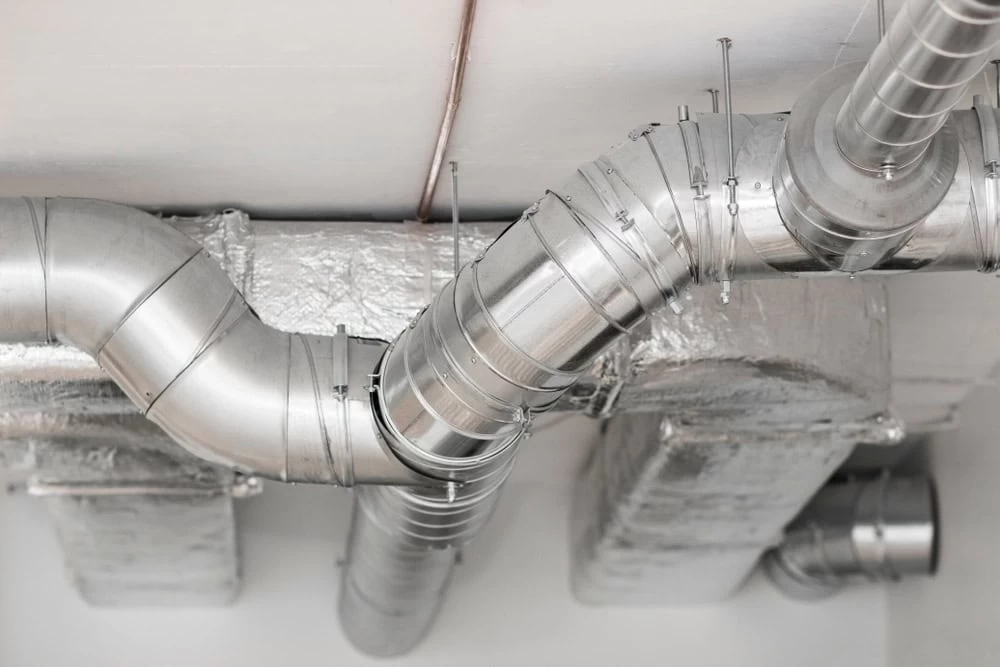
The only way to remove contamination that’s already inside the system is to physically clean the system — all of it. That means the ducts, the air handler, the coils, the drain pan, the registers, and the grilles. Not just the vent covers you can see from the living room. The whole thing. That’s what professional HVAC cleaning actually involves, and it’s why a filter swap — while important — doesn’t complete the job on its own.
How to Tell If Your HVAC System Needs Cleaning After Smoke Exposure
Some of the signs are obvious. If your house still smells faintly of smoke weeks after the fire is out and the outdoor air has cleared, that’s a strong indicator. If you’ve noticed your allergy symptoms are worse indoors than outside on a clear day, that’s another one. If the air coming from your vents has a stale or dusty quality that wasn’t there before fire season, pay attention to that.
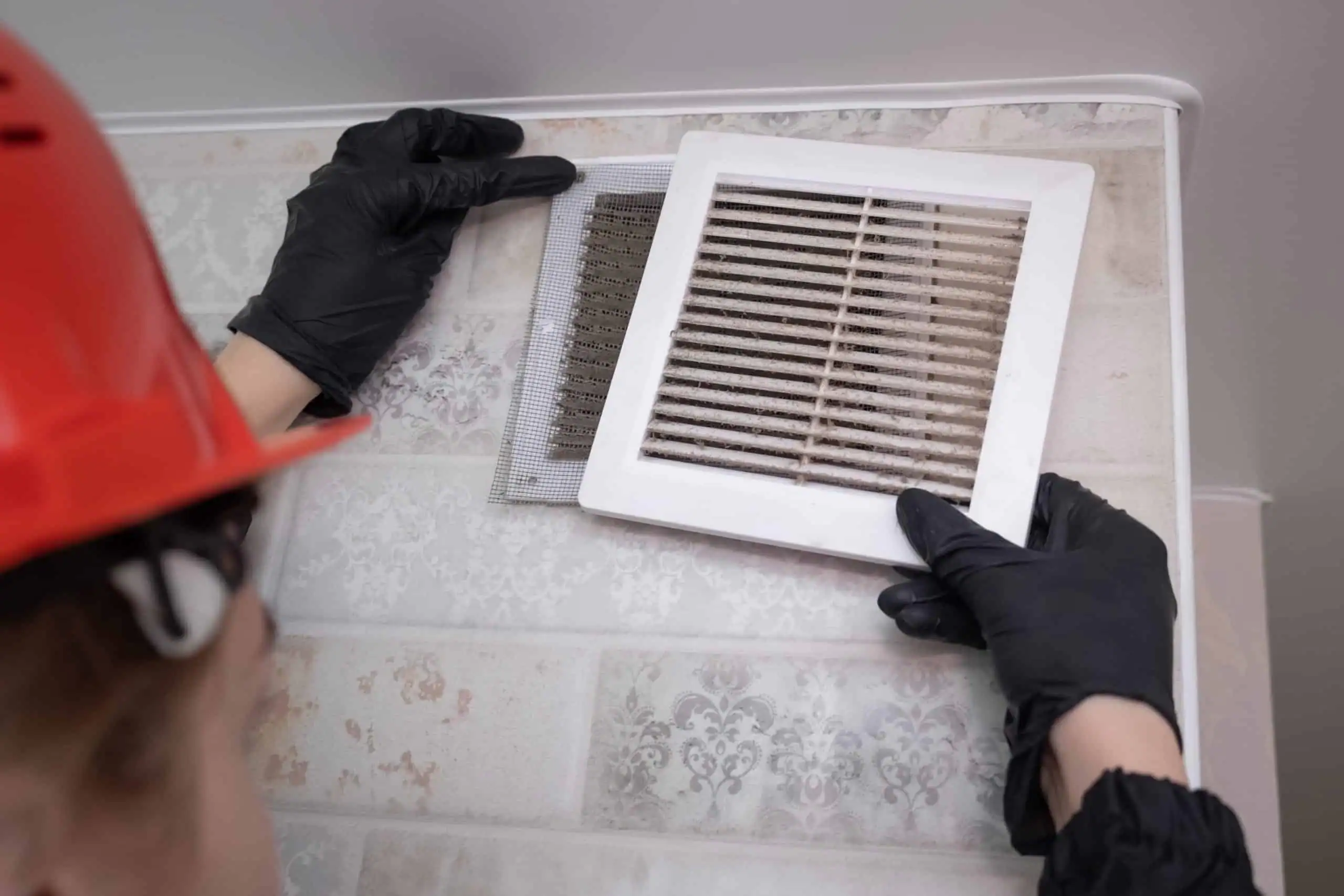
But here’s the thing that catches a lot of people off guard: many of the most harmful components of wildfire smoke — PM2.5, certain VOCs — are completely odorless. Your system can be significantly contaminated and you’d have no idea based on smell alone. This is especially true in Sacramento neighborhoods with older housing stock, like Land Park, Oak Park, East Sacramento, and Midtown, where duct systems may not have been professionally cleaned in years — or ever. Those systems had a baseline level of buildup before wildfire season even started. Add a season’s worth of smoke exposure on top of that, and the air quality picture inside those homes gets concerning.
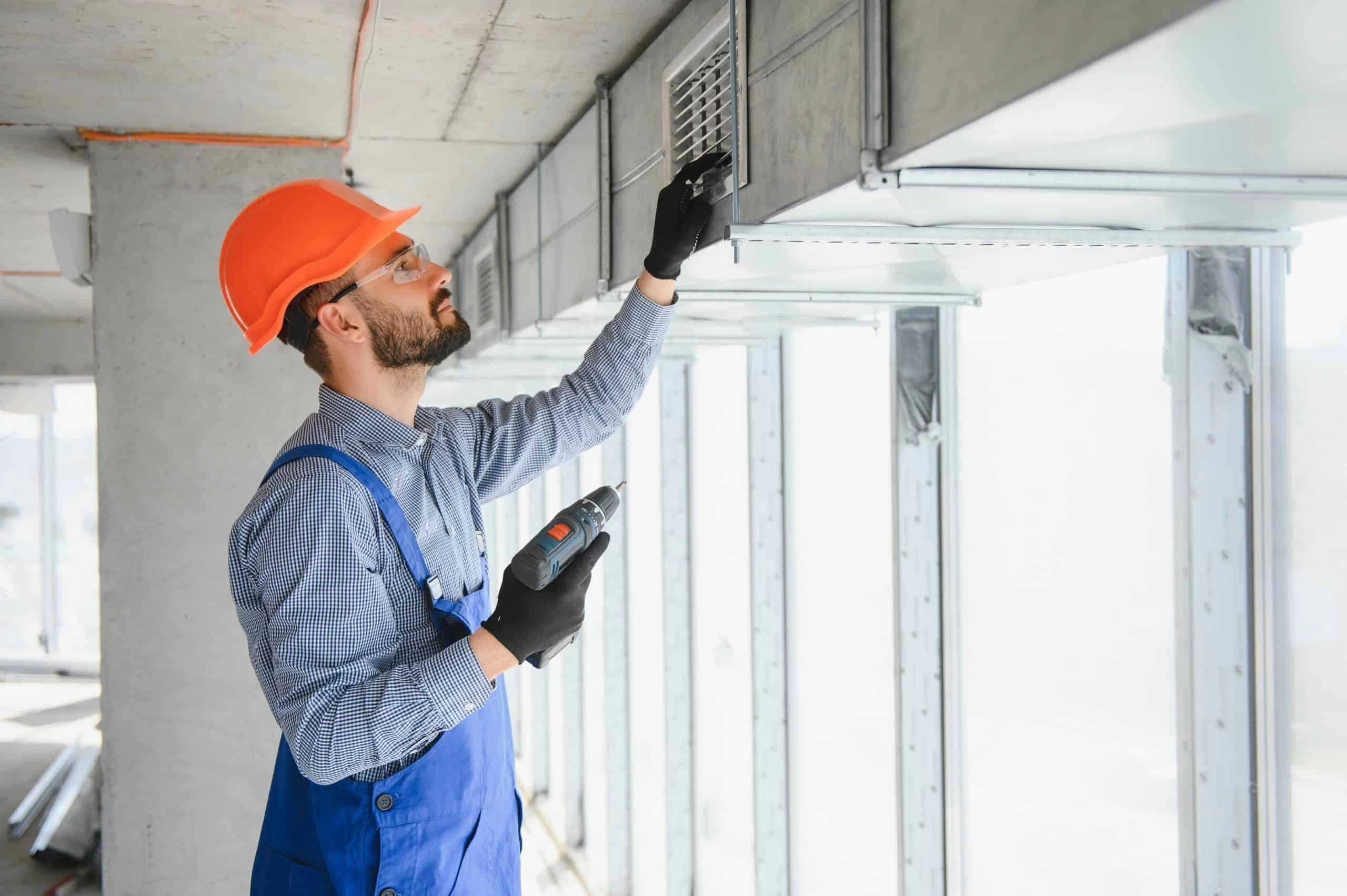
The most reliable way to know what’s actually in your system is to have it inspected. A legitimate inspection — using a videoscope to look inside the ductwork — will show you exactly what’s accumulated. You might be surprised. Customers who’ve come to us after wildfire seasons have described their systems as looking like the inside of a fireplace. Others have had relatively light buildup and didn’t need a full cleaning — and we told them that, because there’s no point in cleaning a system that doesn’t need it. An honest inspection gives you the real picture, not a sales pitch.
What Professional HVAC Cleaning Actually Looks Like
There’s a lot of confusion in this space — and a lot of bad actors who’ve made homeowners rightfully skeptical. You’ve probably heard about the $99 whole-house special. The technician shows up, wipes the vent covers, runs a vacuum for 20 minutes, and hands you a bill. That’s not HVAC cleaning. That’s theater.
A legitimate HVAC system cleaning takes two to four hours, depending on the size of your home and system. It covers every component — not just the vents you can see, but the air handler, plenum, all supply and return ducts, cooling coils, drain pans, registers, and grilles. We use professional-grade equipment to create negative air pressure inside the system, so that when debris is dislodged, it gets captured and removed — not pushed further into your home.
What a Whole-System HVAC Cleaning Involves, Step by Step
Before any cleaning begins, the system should be inspected — ideally with a videoscope that lets our technician see inside the ductwork. This tells you what you’re actually dealing with and creates a baseline for comparing the before and after. Any company that skips this step and goes straight to cleaning is cutting a corner you should know about.
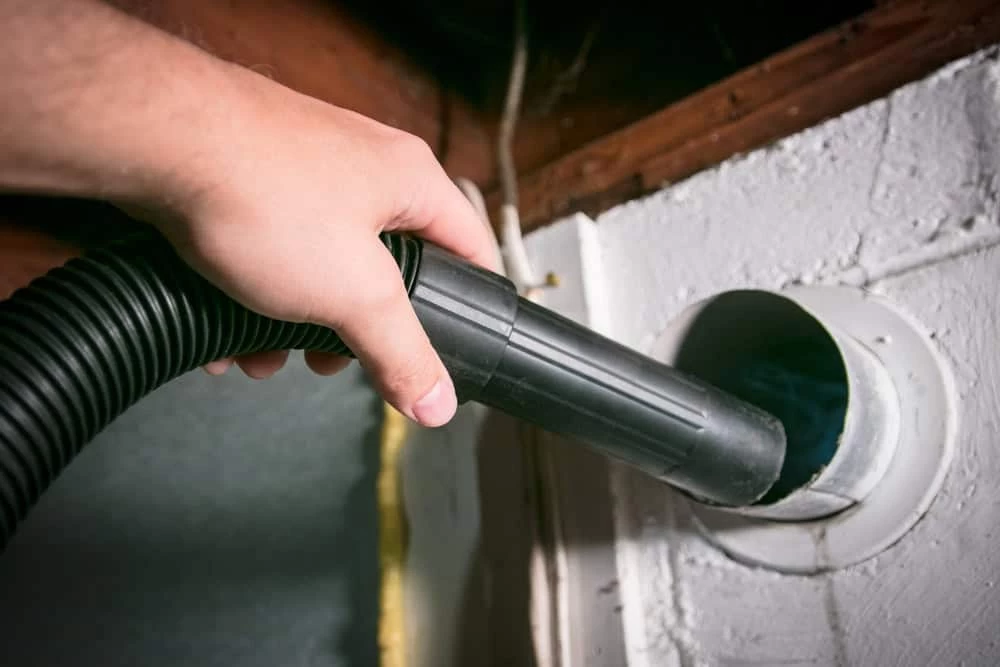
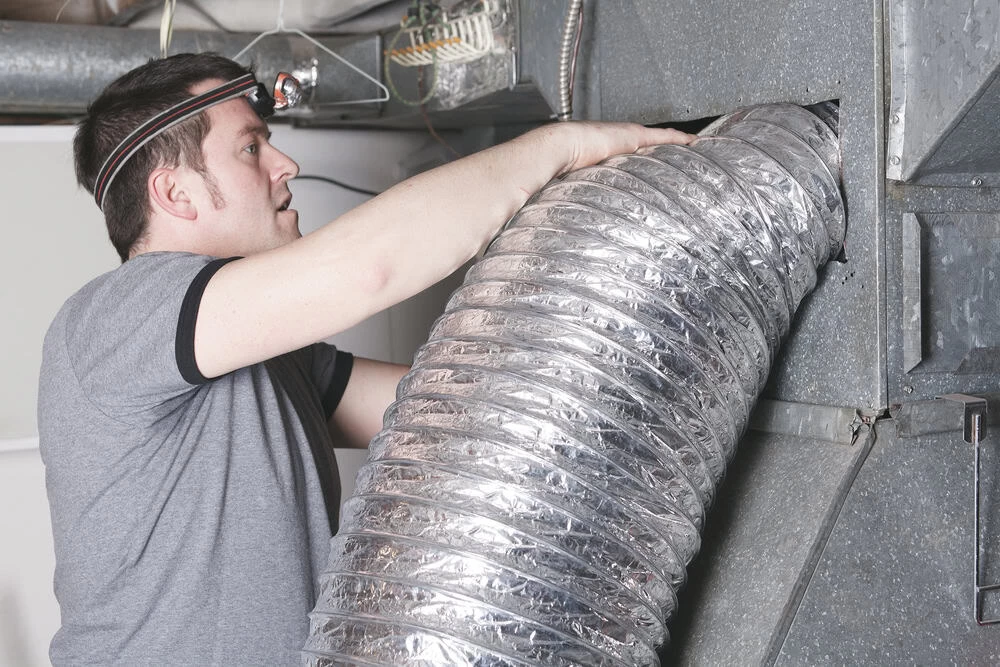
From there, every vent cover comes off, gets cleaned, and gets reinstalled. We work through the full duct system — supply ducts, return ducts, the main plenum — using agitation tools and negative air pressure equipment to dislodge and capture accumulated debris. The air handler cabinet gets opened and cleaned. The evaporator coils and drain pan, which are notorious for harboring mold and trapped particulates, get addressed. By the end, you’re not just looking at cleaner vents — you’re looking at a fully cleaned system.
When we finish a job, we walk you through what was removed and show you how the system is running. That’s not a bonus feature — it’s just the right way to do the work. You should be able to see what was in your system and feel confident that it’s been properly addressed. If a company can’t or won’t show you that, ask yourself why.
One more thing worth knowing: the NADCA standard — the industry benchmark for HVAC cleaning set by the National Air Duct Cleaners Association — requires what’s called “source removal,” meaning contaminants are physically extracted from the system, not just stirred up or blown around. If a company can’t explain what source removal means or what equipment they use to achieve it, that’s a red flag. We can walk you through our process before we ever touch your system.

How Often Should HVAC Systems Be Cleaned in Sacramento?
This question comes up constantly, and the honest answer is: it depends — but Sacramento’s air quality environment means most homeowners here should be thinking about it more often than the national average suggests.
General industry guidance puts professional HVAC cleaning on a three-to-five year cycle for a typical household. But Sacramento isn’t a typical air quality environment. The combination of wildfire smoke seasons, Central Valley agricultural burning, valley temperature inversions that trap particulates near the ground through the winter months, and vehicle emissions from major corridors like I-5, I-80, and Highway 99 means your system is working harder and collecting more than a comparable home in a cleaner market. The California Air Resources Board has documented that PM2.5 pollution causes thousands of deaths in California annually — and Sacramento’s geography puts it in the direct path of some of the state’s worst air quality events year after year.
If your home went through the 2018 Camp Fire smoke season, the 2021 Dixie or Caldor Fire events, or any of the significant smoke episodes since then with the HVAC running, that’s a reason to have the system inspected regardless of when it was last cleaned. The same goes if you’ve recently moved into a home in an older Sacramento neighborhood — Natomas, Rancho Cordova, Citrus Heights, Folsom — and don’t have records of the system’s cleaning history. You don’t know what the previous occupants ran through that system, and a videoscope inspection will tell you more in 10 minutes than any amount of guessing.
For dryer vents specifically, the NFPA reports that failure to clean is the leading cause of dryer fires in the United States, responsible for roughly one in three dryer-related home fires. Annual cleaning is the standard recommendation — and in our experience, a lot of Sacramento homeowners are years past that. We’ve opened dryer vents that were packed solid with lint and condensation. That’s not a maintenance issue at that point — it’s a fire hazard sitting inside your wall.
Sacramento HVAC Cleaning: What to Do Before You Run Your System Again
If you’ve been running your HVAC through wildfire season in Sacramento, CA, the most important thing you can do right now is get the system inspected before assuming the air inside your home is clean. A filter change helps. It doesn’t solve the problem. The contamination from wildfire smoke — the PM2.5, the soot, the VOCs — is inside the system, and it will keep recirculating until it’s physically removed.
A legitimate inspection costs you nothing upfront and tells you exactly what you’re dealing with. If the system doesn’t need cleaning, you’ll hear that. If it does, you’ll get a straight answer on what the job involves and what it costs — no surprises, no pressure, no mid-job discoveries designed to inflate the bill.
We’ve been serving Sacramento County and the surrounding region for over a decade. If you have questions about your system or want to schedule an inspection, reach out to us — the owner is directly involved, the pricing is transparent, and the work speaks for itself.