Summary:
You clean the lint trap. Every load, maybe even twice. So the dryer vent is probably fine, right?
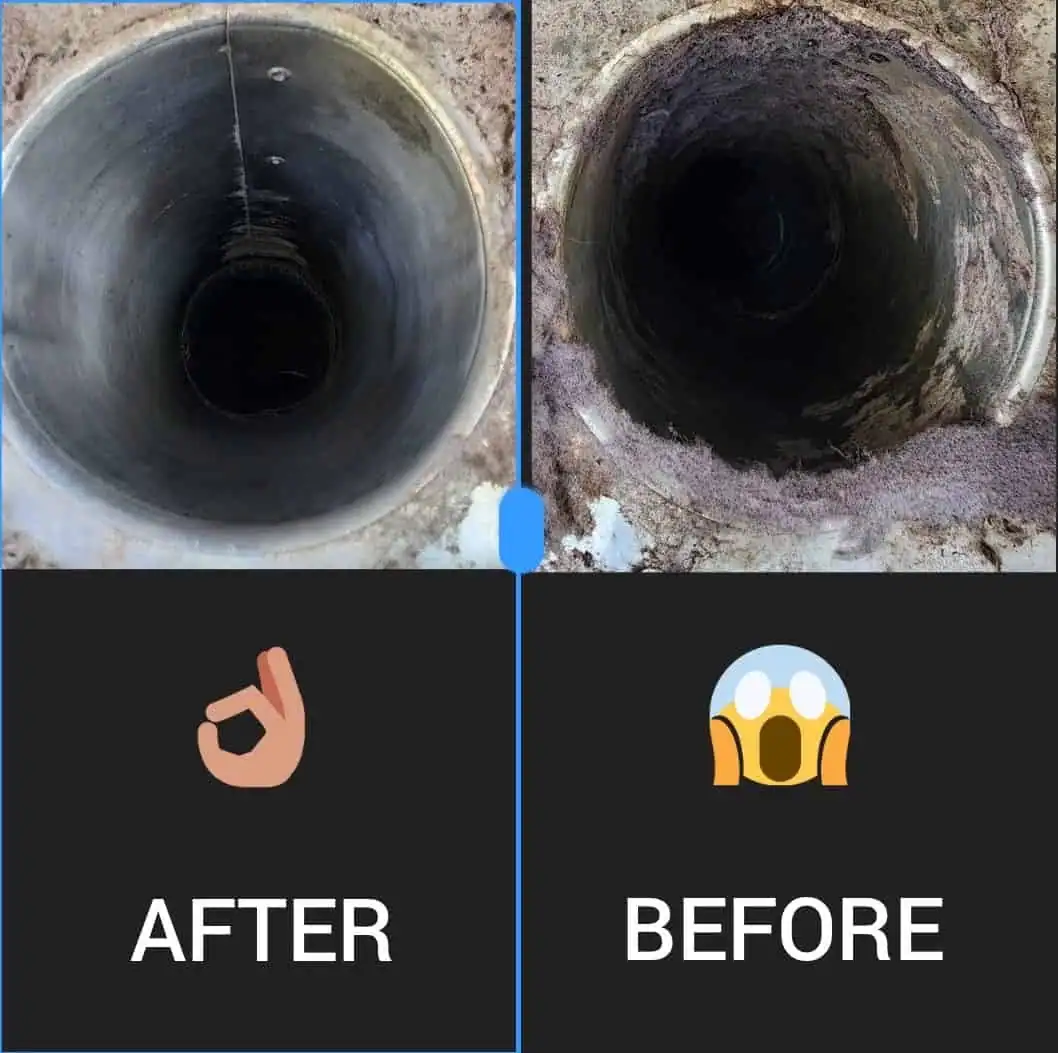
Not quite. The lint trap catches some of what comes off your clothes — but the rest keeps moving. It travels into the vent duct behind your dryer and starts stacking up, inch by inch, load by load, year by year. You can’t see it. You can’t smell it — at least not at first. And because the dryer keeps running, it’s easy to assume nothing’s wrong.
That assumption is exactly how a small maintenance task turns into a costly repair, a broken appliance, or something far more serious. Here’s what’s actually happening inside a vent that’s never been cleaned.
What a Clogged Dryer Vent Actually Does to Your Home
A dryer vent has one job: move hot, moist, lint-laden air from inside your dryer to outside your home. When that pathway gets restricted — by lint buildup, a crushed duct, a bird nest at the exterior cap, or just years of accumulated debris — everything downstream starts to suffer.
The dryer works harder. Drying times stretch. Heat backs up into the drum instead of exhausting properly. And the longer this goes on, the more strain it puts on every component in the machine. What starts as a minor inconvenience becomes a real problem, usually right around the time you least want to deal with it.
Why Your Dryer Takes Two Cycles to Dry One Load

This is usually the first sign people notice — and the one they’re most likely to write off. A load that used to finish in 45 minutes now takes 70, 80, sometimes 90 minutes. Or it comes out still damp, and you run it again. You figure the dryer is getting old. Maybe it’s just how it is now.
What’s actually happening is simpler and more fixable than that. When airflow is restricted, the hot air your dryer generates has nowhere to go. It recirculates inside the drum instead of exhausting outward, which means moisture from your clothes has no way to escape efficiently. The dryer keeps running, keeps heating, and still can’t finish the job — because the problem isn’t the dryer itself. It’s the vent.
Every extra cycle you run costs money. It might not feel significant load by load, but over the course of a year, a dryer running two cycles where one should do the job can add hundreds of dollars to your energy bill. That’s not a vague estimate — it’s the documented result of restricted airflow forcing a machine to work far beyond what it was designed to do.
For busy households throughout Solano County — families running multiple loads a week, juggling work commutes and kids’ schedules — this kind of quiet drain on time and money adds up fast. You’re not just paying more on your utility bill. You’re spending more time waiting on laundry that should already be done.
There’s also the wear-and-tear side of this. A dryer that runs hot and long because airflow is blocked puts constant stress on its heating element, motor, and drum seals. A machine that might last 15 years under normal conditions can fail years earlier when it’s been running restricted for an extended period. Replacing a dryer isn’t cheap. Cleaning a vent is.
The Overheating Problem Most Homeowners Don't Connect to the Vent
If your laundry room feels unusually warm when the dryer is running, or your clothes come out almost too hot to handle, that’s not normal — and it’s not just uncomfortable. It’s a sign that heat is backing up into the system instead of exhausting the way it should.
Modern dryers have a built-in thermal shutoff — a safety feature that cuts the machine off when internal temperatures get too high. If your dryer has ever stopped mid-cycle for no obvious reason and then started working again after cooling down, that’s likely what happened. It’s the machine protecting itself. It’s also the machine telling you something is wrong.
The reason overheating matters beyond appliance wear is straightforward: lint is extraordinarily flammable. It’s fine, dry fiber — it ignites at temperatures a dryer’s heating element can easily reach, especially when airflow is compromised and heat is building up inside the duct rather than moving through it. The National Fire Protection Association has documented this clearly. Failure to clean the dryer and its venting system is the leading cause of dryer-related home fires, accounting for roughly a third of all dryer fires in the United States. Approximately 2,900 residential dryer fires occur every year in this country, resulting in deaths, injuries, and tens of millions of dollars in property damage.
These fires are most common between September and January — the months when dryers run harder, loads are heavier, and the vent system is under the most stress. If you’ve been putting off dryer vent cleaning, fall is exactly the wrong time to keep waiting.
One more thing worth knowing for Solano County residents with a gas dryer: a clogged vent doesn’t just trap lint. It can also trap carbon monoxide — the odorless byproduct of combustion that the vent is specifically designed to carry outside. A restricted gas dryer vent can allow CO to back up into your home. That’s not a dramatic edge case. It’s a real risk that a clean, unobstructed vent prevents entirely.
How Professional Dryer Vent Cleaning Actually Works
A lot of people assume dryer vent cleaning is simple — disconnect the duct, run a brush through it, done. For a short, straight vent run, that’s roughly accurate. But most homes in Solano County aren’t built that way.
Older homes in Vallejo, CA and Fairfield, CA often have longer duct runs, more bends, and in some cases outdated foil or accordion-style plastic ductwork that collapses over time and traps lint far more aggressively than rigid metal venting. Newer construction in Vacaville, CA and Dixon, CA tends to have longer runs too, simply because the homes are larger. A DIY kit from the hardware store — typically designed for runs of around four feet — won’t reach the full length of most of these systems, and it won’t dislodge compacted lint the way professional equipment does.
What to Expect During a Professional Dryer Vent Cleaning
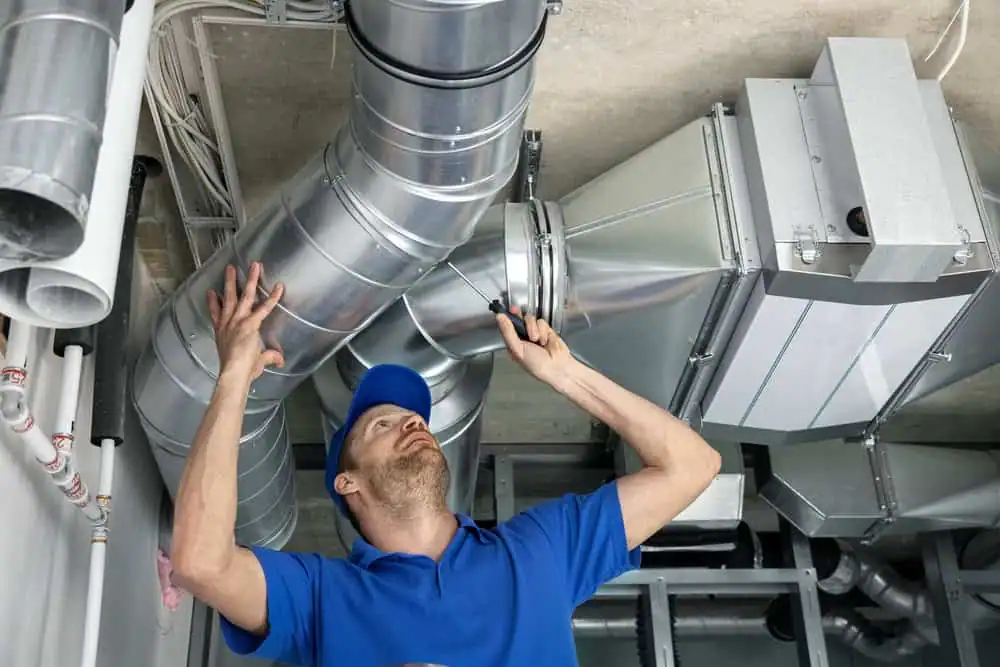
Professional dryer vent cleaning starts with an inspection — not just a visual check, but an actual assessment of the full system. We look at the connection point behind your dryer, trace the duct run, identify any bends or potential restrictions, and check the exterior termination point for damage, blockages, or improper installation. Bird nests at exterior vent caps are more common than most people expect, particularly in Solano County where the persistent afternoon winds push debris toward any opening they can find.
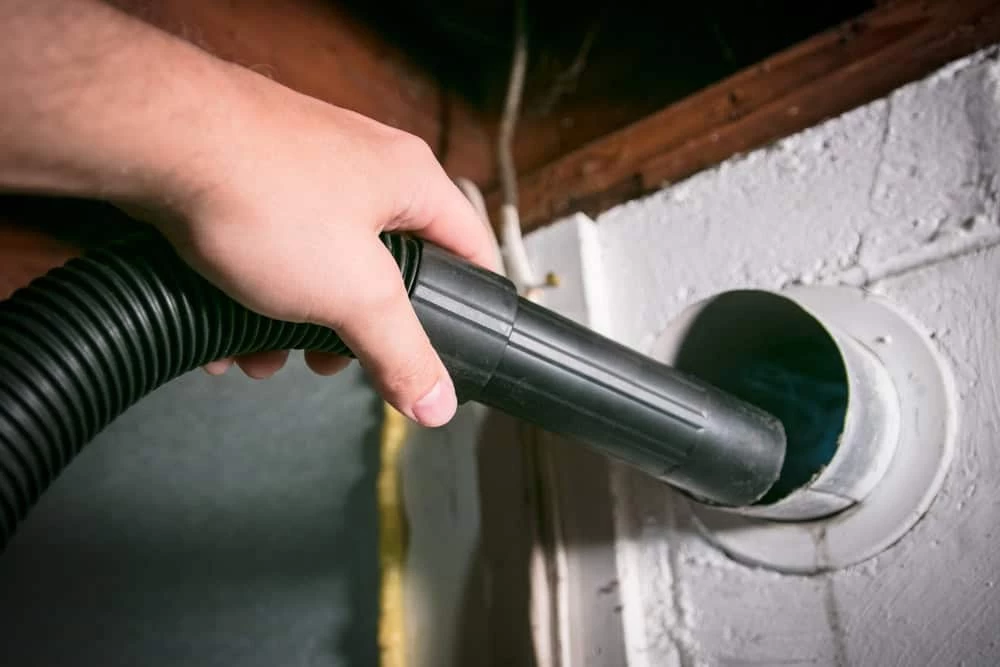
Once the inspection is done, the cleaning itself uses professional rotating brushes and high-powered vacuum equipment specifically designed for dryer vent systems — not shop vacs, not standard HVAC equipment. The brushes work through the full length of the duct, dislodging lint that’s been compacted over months or years, while the vacuum pulls it out cleanly without pushing debris back into your home.
After cleaning, a proper job doesn’t just stop there. We test airflow to confirm the vent is actually performing the way it should. That post-cleaning verification matters — it’s the difference between knowing the job is done and assuming it is. If there are repairs needed, like a damaged duct section or an improperly installed termination cap, those get identified during this process rather than discovered later when something fails.
The whole job typically takes under an hour for a standard single-story system. For more complex configurations — roof vents, longer runs, or systems that haven’t been serviced in several years — it may take a bit longer. Either way, the result is a vent that moves air the way it was designed to, a dryer that runs the way it should, and one fewer thing to worry about in a house that already has plenty of demands on your attention.
For homeowners who’ve recently moved into a home in Benicia, CA, Suisun City, CA, or anywhere else in Solano County and have no idea when the vent was last cleaned — or whether it ever was — reaching out to us is a reasonable first step. You’re not overreacting. You’re just catching up on something the previous owner may have skipped entirely.

How Often Should You Have Your Dryer Vent Cleaned in Solano County?
The general recommendation from both the NFPA and NADCA is once per year for most households. That’s a reasonable baseline — but it’s not the full picture for every home.
If your household runs the dryer frequently, has pets whose fur works its way into every fabric surface you own, or has a longer or more complex vent configuration, annual cleaning is a minimum, not a ceiling. The same goes for homes where drying times have already started creeping up. By the time you’re noticing that, the buildup is already meaningful.
Solano County homes have a few factors worth considering specifically. The county’s housing stock includes a significant number of older homes — particularly in Vallejo, CA and parts of Fairfield, CA — where the original ductwork may never have been updated. Older foil or plastic accordion-style venting is a known lint trap. It collapses, sags, and creates low points where moisture and lint accumulate together, which can eventually lead to mold growth inside the duct in addition to the fire and airflow concerns. If your home still has this type of ductwork, the cleaning conversation may also turn into a replacement conversation — and that’s worth knowing sooner rather than later.
Military families at or near Travis Air Force Base in Fairfield, CA face a specific version of this uncertainty: you move into a home with no maintenance history, no records of what was serviced and when, and no way to know whether the previous occupants ever thought about the dryer vent at all. Getting it inspected and cleaned when you move in isn’t excessive caution. It’s just good sense.
For most Solano County homeowners, the honest answer to “how often?” is: at least once a year, more often if you’re seeing any of the warning signs — longer drying times, a laundry room that runs hot, clothes that come out unusually warm, or a burning smell at any point during a cycle. Any one of those is worth a call. All of them together means don’t wait.
Dryer Vent Cleaning in Solano County: When to Stop Waiting
The reason most dryer vents go uncleaned for years isn’t laziness — it’s invisibility. You can’t see inside the duct. The dryer keeps running. Nothing dramatic happens. And so it stays on the back of the mental to-do list until something finally forces the issue.
The problem is that by the time something forces the issue, the options tend to be more expensive and more disruptive than a routine cleaning would have been. A dryer that fails, a repair bill, an energy bill that’s been quietly inflated for a year or more — none of that is inevitable. It’s just what happens when a simple annual maintenance task gets skipped long enough.
If you’re in Vallejo, CA, Fairfield, CA, Vacaville, CA, Benicia, CA, Suisun City, CA, Dixon, CA, or anywhere else in Solano County and you’re not sure when your dryer vent was last cleaned — or you’re already noticing some of the warning signs covered here — we’re here to help. No hidden fees, no pressure, and a free quote so you know exactly what you’re looking at before we come to your door.