Summary:
You toss a load in the dryer before dinner, and it’s still damp when you go to bed. So you run it again. Maybe you’ve been doing this for months, chalking it up to an older machine or a heavy load. But here’s the thing — a dryer that consistently takes two cycles to finish a load isn’t just slow. It’s telling you something is wrong.
Most of the time, it’s not the dryer itself. The problem is usually somewhere in the airflow system, and it’s fixable. We’ll walk you through the most common causes of long drying cycles, what you can check on your own, and when it makes sense to call us in.
Why Your Dryer Takes Too Long to Dry Clothes
A dryer works by doing three things at once: generating heat to evaporate moisture, moving air through the drum to carry that moisture out, and tumbling your clothes so every surface gets exposed to the warm airflow. If any one of those three things is compromised, your drying time goes up — sometimes dramatically.
The most common culprit, by a wide margin, is restricted airflow. When air can’t move freely through the vent system, moisture has nowhere to go. The dryer runs, the drum spins, heat builds up — but your clothes stay damp because the wet air is trapped. About 70% of slow-dryer cases come down to this single issue.
Is a Clogged Dryer Vent Making Your Dryer Run Slow?

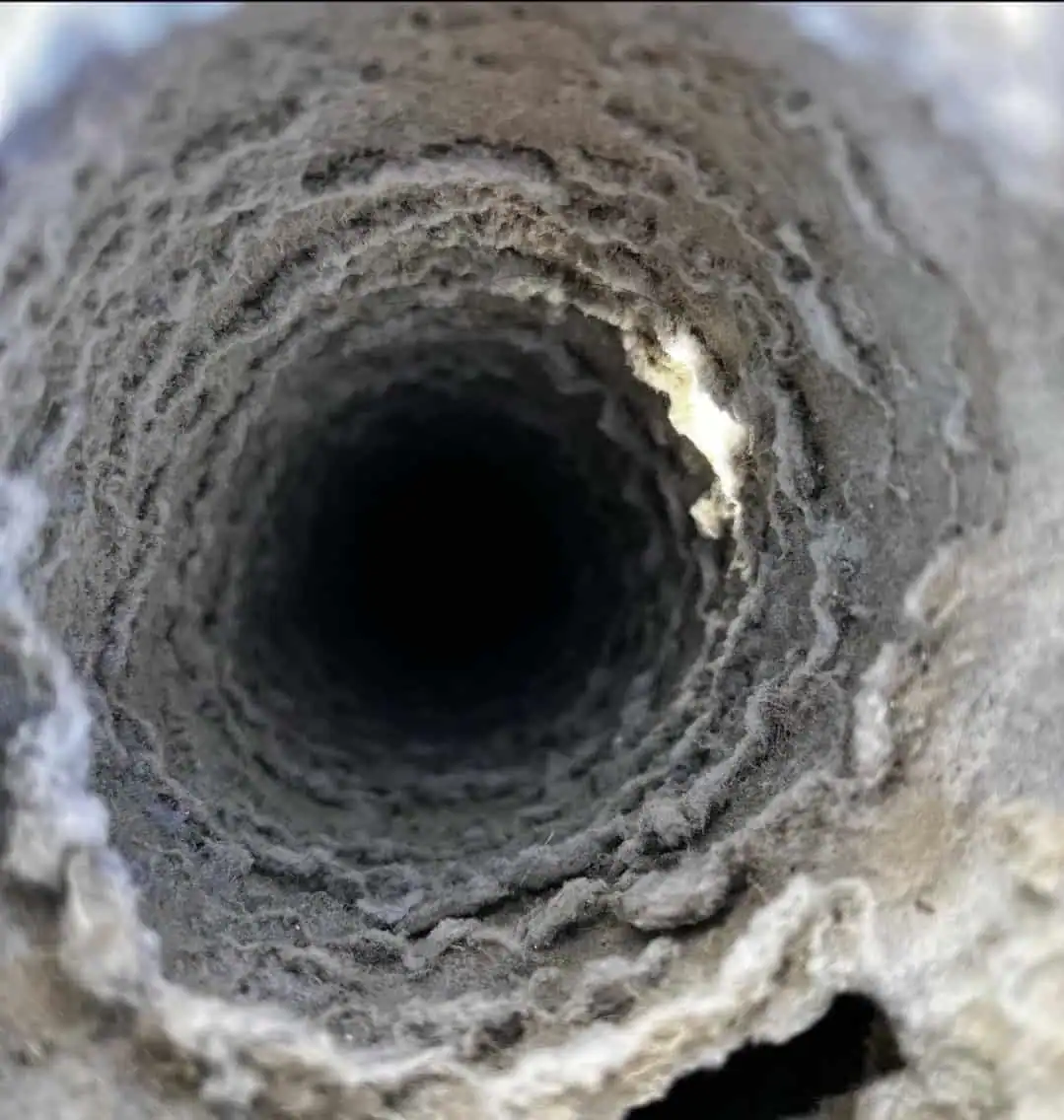
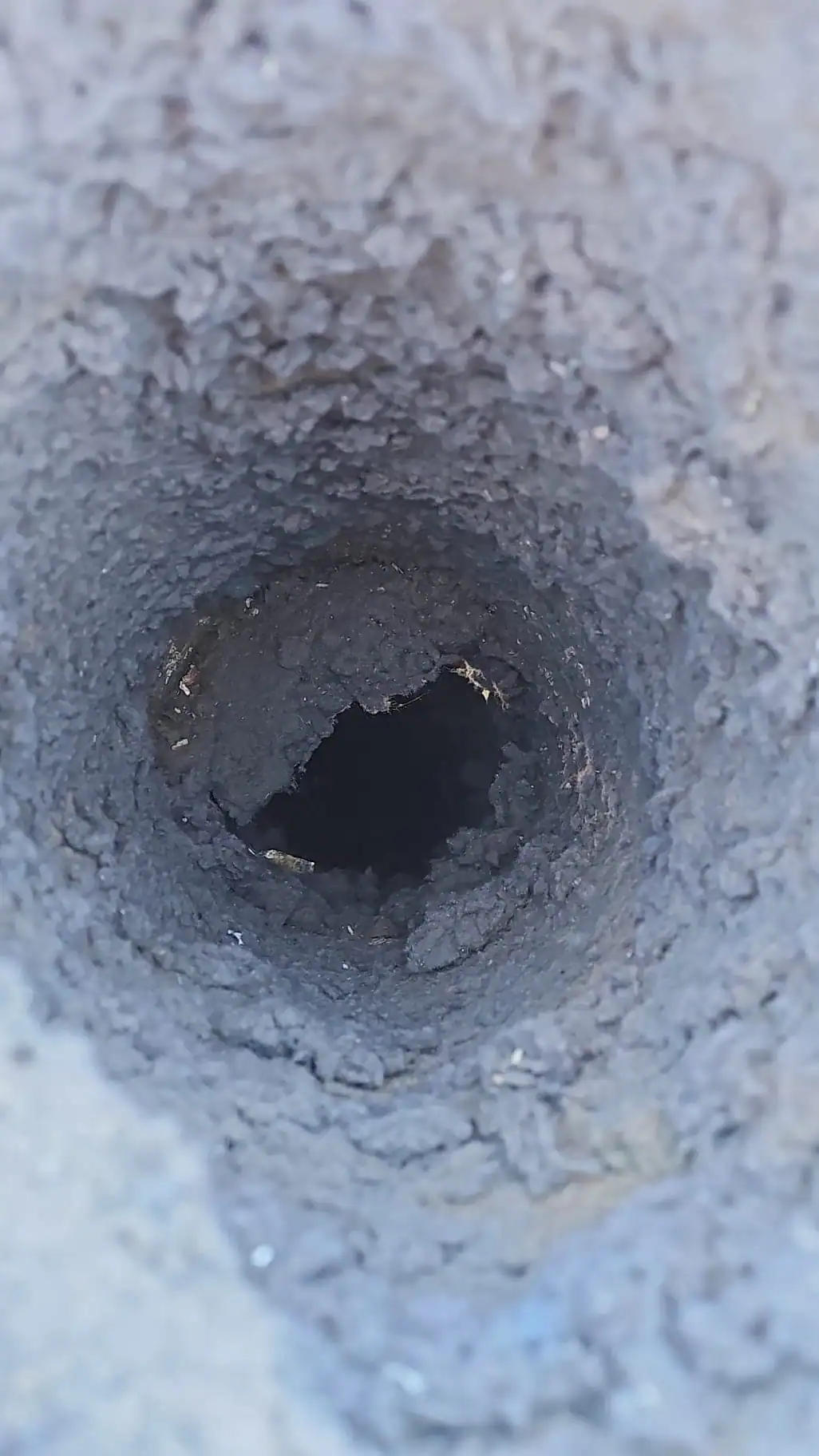
This is the first thing worth ruling out, and for most Sacramento County homeowners, it turns out to be the answer. Lint doesn’t just collect in the trap you clean after every load — it accumulates inside the vent duct that runs from the back of your dryer through the wall and out to the exterior of your home. That duct can run 10, 20, or even 30 feet depending on how your home is laid out, and every foot of it is a place where lint can build up, compact, and eventually restrict airflow to the point where your dryer can barely function.
In older Sacramento County neighborhoods like Carmichael, Arden-Arcade, and Fair Oaks, this problem tends to be worse. Many of those homes were built in the 1950s through the 1970s, and the laundry area may have been moved or modified over the years. Vent paths in those homes often include extra turns, longer runs, or sections of flexible foil duct that’s no longer considered safe by current standards — all of which trap lint more aggressively than a clean, straight run of rigid metal duct.
Sacramento’s climate adds another layer. During tule fog season — roughly November through February — ambient humidity in the valley runs high, and that moisture makes its way into dryer ducts. When humid air mixes with lint inside a duct, the lint doesn’t stay loose and fluffy. It compacts into a dense, almost papery crust along the duct walls. We’ve opened up vents in Sacramento County homes and pulled out material that looks nothing like lint anymore — it’s a solid mass. That’s what’s choking your airflow.
There’s also a fire risk dimension here that’s worth stating plainly. The National Fire Protection Association reports that failure to clean the dryer vent is a contributing factor in roughly a third of all home dryer fires. A slow dryer isn’t just an inconvenience — it’s often a warning sign that the vent system is in a condition that increases fire risk.
Other Reasons Your Dryer Might Be Drying Slowly
Once you’ve ruled out the vent — or confirmed it’s the problem — it’s worth knowing what else can cause long drying cycles, because sometimes more than one thing is going on at once.
The lint trap is the obvious starting point. Most people clean it after every load, which is the right habit. But fabric softener sheets leave behind a thin, waxy film that coats the mesh over time and reduces airflow even when the trap looks clean. You can test this by holding the trap under running water — if water pools on the surface instead of draining through, the mesh is clogged with residue. Washing it with warm soapy water and a soft brush usually fixes it.
Overloading is another common factor. When you pack too many clothes into a drum, they don’t tumble freely, which means hot air can’t circulate through the load properly. A dryer that’s three-quarters full will consistently outperform one that’s stuffed to the door.
Moisture sensors are something most homeowners don’t think about. Modern dryers use two small metal bars inside the drum to detect when clothes are dry and shut the cycle off automatically. When those bars get coated with dryer sheet residue, they can misread moisture levels and either cut the cycle short or cause the dryer to run on a timed cycle that doesn’t account for actual dryness. Wiping the sensor bars with a bit of rubbing alcohol on a cloth is a simple fix that sometimes makes a noticeable difference.
There’s also a scenario where the washer is actually the problem. If your washing machine’s spin cycle isn’t extracting water efficiently — whether due to an imbalanced load, a worn bearing, or a leaking water valve — your clothes arrive in the dryer wetter than they should be. The dryer then has to remove more water than it’s designed to handle in a standard cycle, which makes everything take longer. If you notice your clothes feel unusually heavy coming out of the wash, that’s worth investigating before assuming the dryer is at fault.
When to Clean Your Dryer Vent Yourself — and When to Call a Professional
There’s a real difference between what DIY dryer vent cleaning kits can accomplish and what professional cleaning actually does. That distinction matters, and it’s worth understanding before you decide which route to take.
DIY kits — the kind you find at hardware stores — typically include a flexible brush that attaches to a drill and extends a few feet into the duct. For a short, straight vent run, that can be enough to dislodge surface lint near the dryer connection. But most Sacramento County homes don’t have short, straight vent runs.
What DIY Dryer Vent Cleaning Can and Can't Do
A flexible brush kit is better than nothing, but it has real limits. It can clean the first few feet of duct near the dryer, but it won’t reach lint that’s compacted 15 or 20 feet down the line, around a turn, or in a section that runs through an attic or beneath a concrete slab. In many Sacramento County homes — particularly ranch-style homes in Natomas, North Highlands, and Rancho Cordova — the vent duct travels a significant distance before reaching an exterior wall. A brush kit simply can’t cover that ground.
There’s also the exterior vent termination to consider. The flap or louver on the outside of your home that lets exhaust air out can get clogged with lint, blocked by debris, or — not uncommonly in Sacramento’s suburban areas — occupied by a bird that’s built a nest inside it. A DIY kit won’t tell you any of that. You’d have to physically inspect the exterior cap yourself, which requires knowing where it is and being able to access it safely.
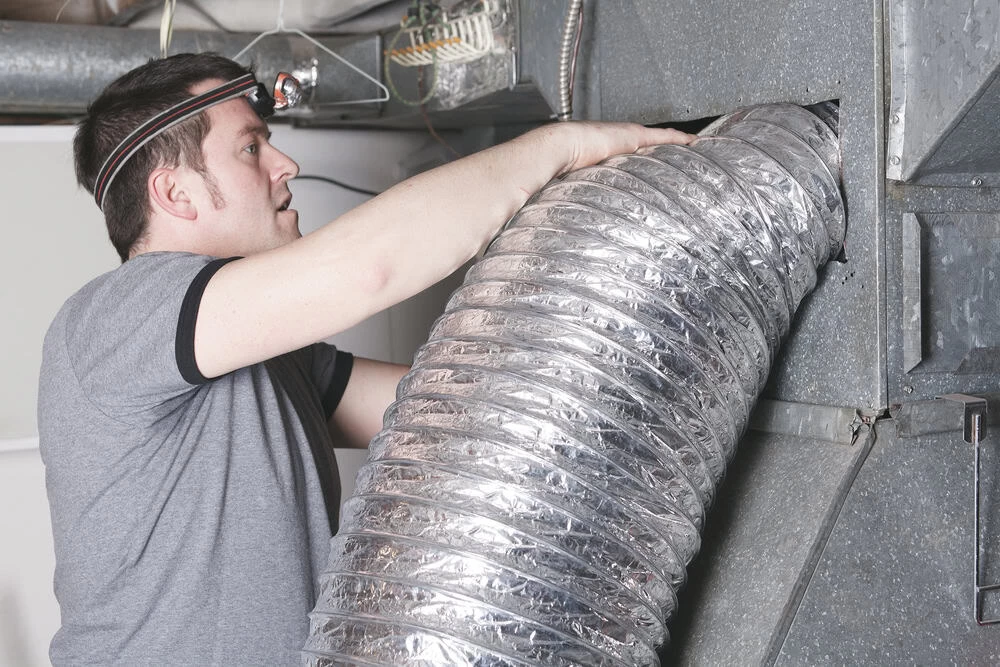
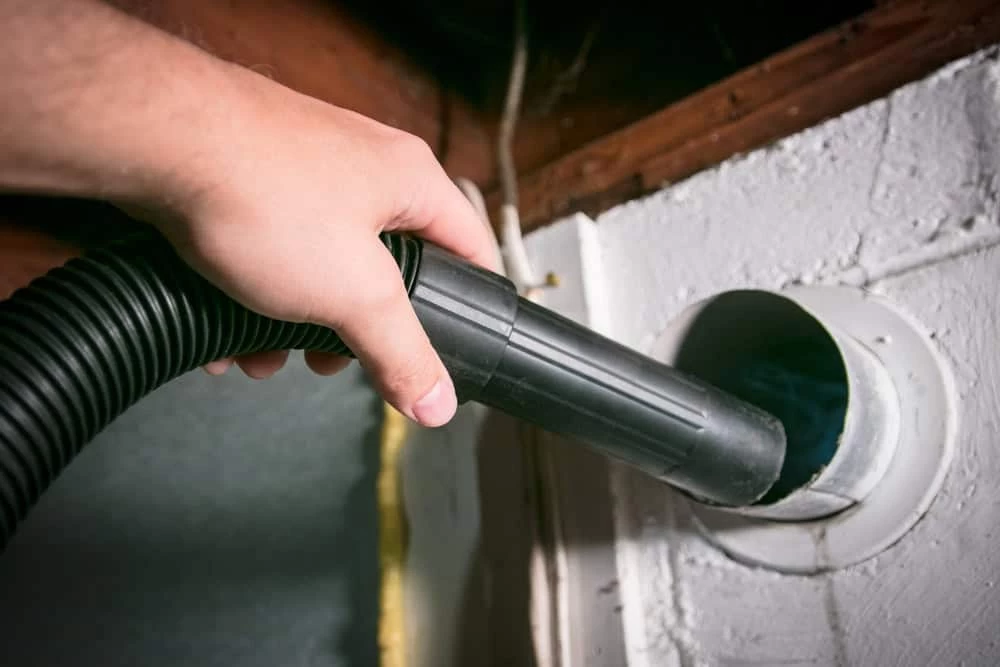
What professional cleaning adds is reach, equipment, and a complete assessment of the whole system. Rotary brush systems used by trained technicians are designed to work through the full length of the duct, dislodging compacted lint from the duct walls rather than just pushing it around. The exterior termination gets inspected and cleared. The duct material itself gets checked — if you still have flexible foil duct, that’s worth knowing, because it’s a fire hazard under current standards and many Sacramento County homeowners inherited it from a previous owner without realizing it.
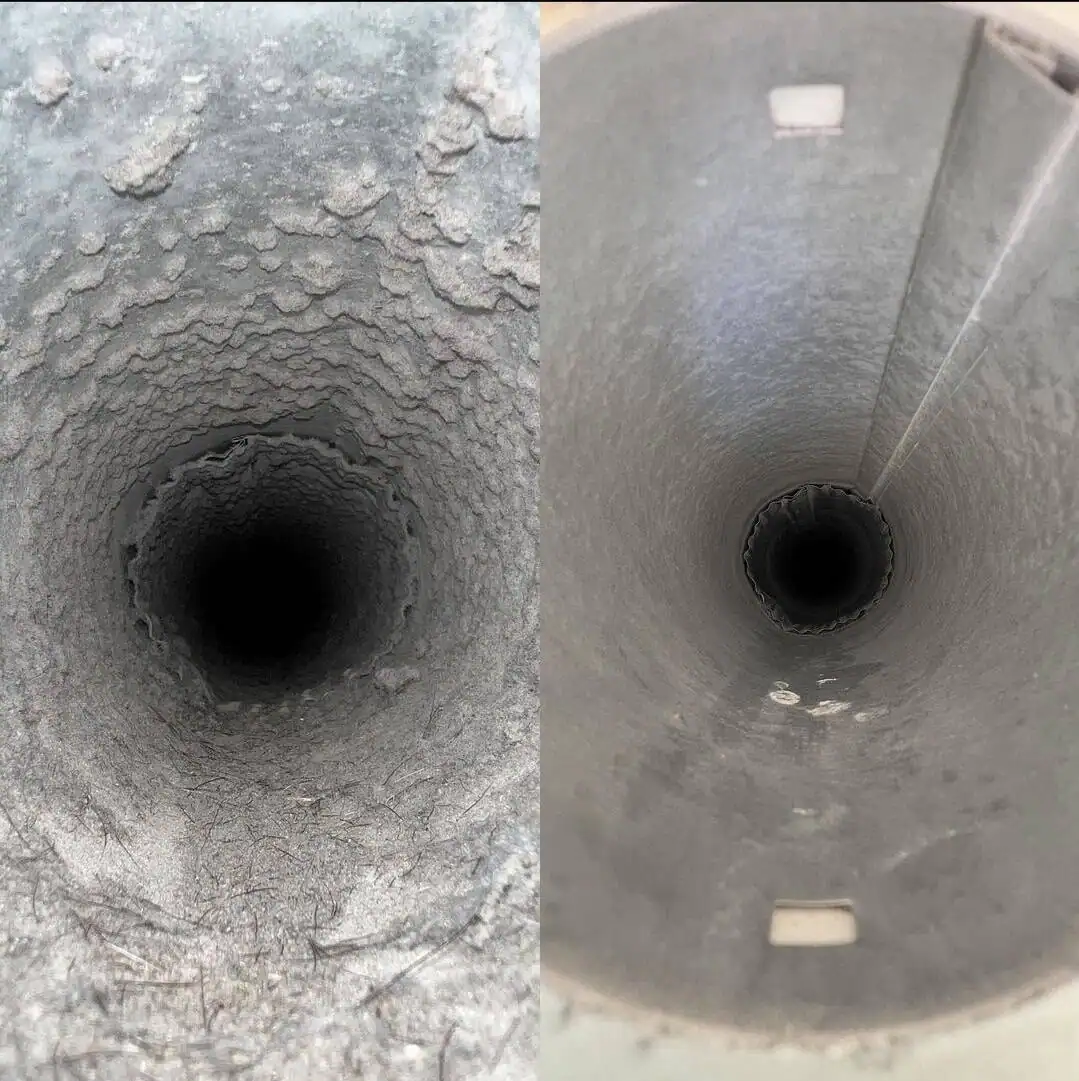
We document what we find with before-and-after photos that give you a clear picture of what was inside your vent and what we removed. That’s not just for peace of mind — it confirms the work was actually done and gives you a baseline for future maintenance.
How Often Should Sacramento County Homeowners Clean Their Dryer Vent?
The general recommendation is once a year for a typical household. But “typical” covers a lot of ground, and several factors common in Sacramento County push that frequency higher.
Households with pets shed more than they realize, and pet hair accelerates lint accumulation in the vent duct significantly. If you have a dog or cat, an annual cleaning schedule is a minimum — every six to eight months is more realistic. The same applies if you do laundry for a large family, run the dryer daily, or have a vent run that’s longer than average or includes multiple turns.
New homeowners in Sacramento County’s active real estate market face a particular challenge: they often have no idea when the vent was last cleaned, if ever. If you’ve recently moved in and don’t know the answer to “when was the dryer vent last cleaned,” that’s a good enough reason to schedule a cleaning now rather than wait for symptoms to show up.
There’s also a seasonal angle worth noting. Dryer fires peak in the fall and winter months, which aligns almost exactly with Sacramento’s rainy season and the period when most households are running their dryers most heavily. Getting your vent cleaned before that heavy-use period begins — late summer or early fall — is a straightforward way to reduce risk when it matters most.
One more thing that comes up frequently: energy costs. A clogged dryer vent can increase your dryer’s energy consumption by 30% or more. In California, where electricity rates are among the highest in the country, that adds up over the course of a year. Professional cleaning isn’t just a safety measure — it’s one that tends to pay for itself through lower utility bills.
Still Dealing with a Dryer That Won't Dry? Here's What to Do Next
If your dryer is taking two cycles to finish a load, running hot without actually drying your clothes, or you simply can’t remember the last time your vent was cleaned — those are all good reasons to get it looked at. Most of the time, the fix is simpler than people expect, and the relief of a dryer that actually works in one cycle is immediate.
Start with the basics: clean the lint trap thoroughly, check for overloading, and inspect the exterior vent cap if you can access it safely. If those steps don’t make a difference, the vent duct itself is almost certainly the issue — and that’s where professional cleaning makes a real difference.
Home Safe Air Duct & Dryer Vent Cleaning has been serving Sacramento County homeowners for over a decade, with transparent pricing, no hidden fees, and direct involvement from owner Jorge Mendoza on every job. If you’re ready to stop running your dryer twice, reach out for a free quote by phone or online — we’re available Monday through Saturday and happy to answer questions before you book.